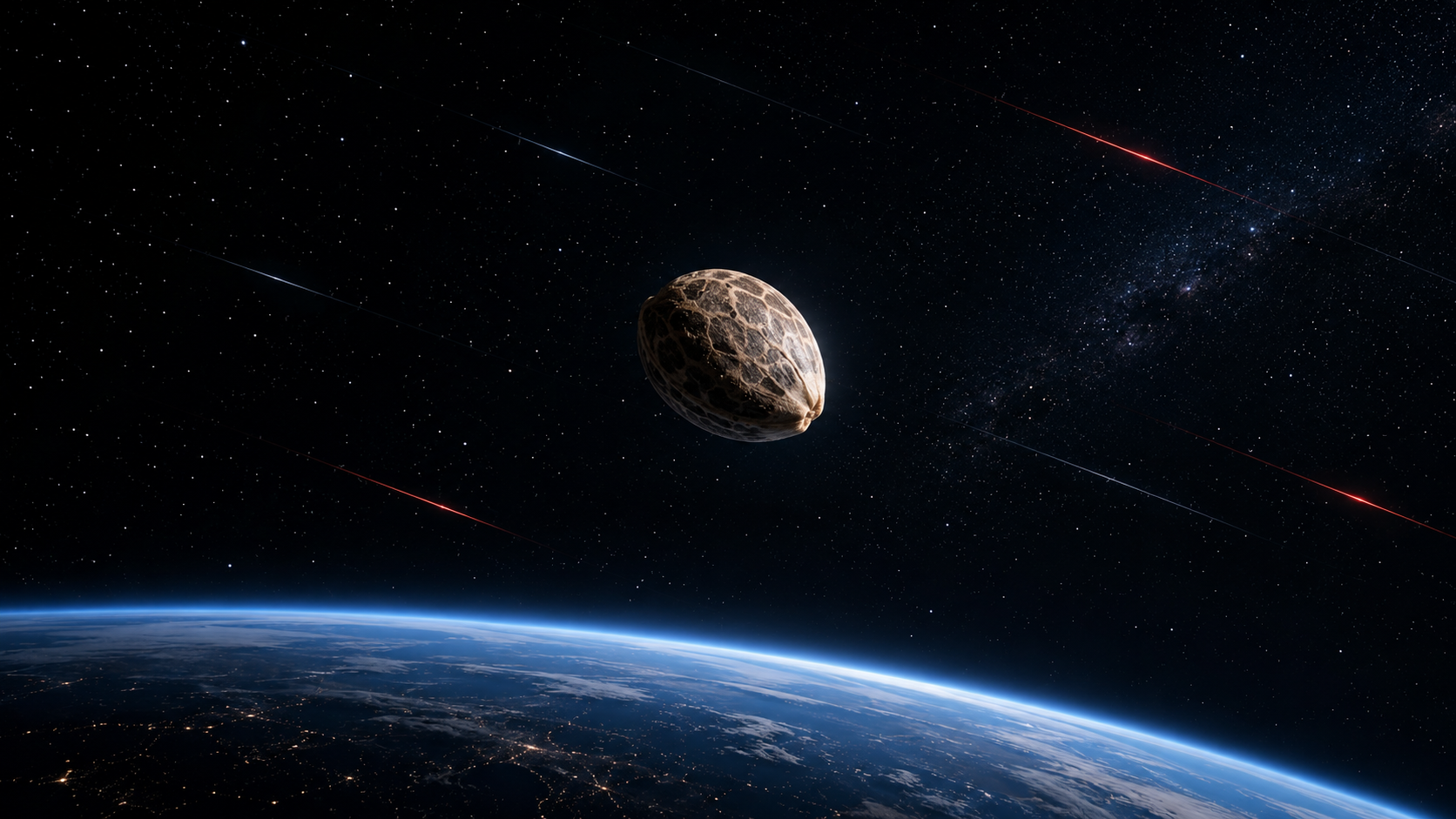
Space breeding is the practice of sending plant seeds into orbit and studying what the experience does to their biology. It is not a metaphor. Seeds go to space, spend months exposed to conditions that do not exist on Earth, and return. Researchers then grow them out, compare them to matched ground controls, and look for what changed.
The practice has a longer history than most people realize. China has been running space breeding programs since the 1980s. The Chinese space agency has flown hundreds of crop varieties — rice, wheat, sesame, tomatoes, peppers — and selected from the returnees for traits including yield, disease resistance, and growth rate. Several commercially cultivated Chinese crop varieties in production today were selected from space-flown populations.
Cannabis has not been part of this history. Until now.
The question
What happens to cannabis genetics when seeds are exposed to nine months of low Earth orbit?
This is the question Martian Grow is designed to answer. Not the philosophical version of that question. The scientific one. With matched controls, multi-omic assays, and pre-registered hypotheses with explicit success thresholds.
The answer does not yet exist. MG-J26 Horizon launches June 27, 2026. The seeds return late 2026. Analysis follows. Until then, everything is hypothesis, and this article labels it as such.
What happens in orbit
Two variables dominate the orbital environment: ionizing radiation and microgravity. They are distinct in their mechanisms and they are not replicated by any combination of terrestrial conditions.
Ionizing radiation in low Earth orbit
Radiation in low Earth orbit is not like radiation on Earth. The difference is not just dose rate. It is the type of radiation.
On Earth, the dominant ionizing radiation sources are gamma rays and X-rays — low linear energy transfer (low-LET) radiation. They damage DNA, but they tend to create single-strand breaks that cellular repair mechanisms handle with reasonable efficiency.
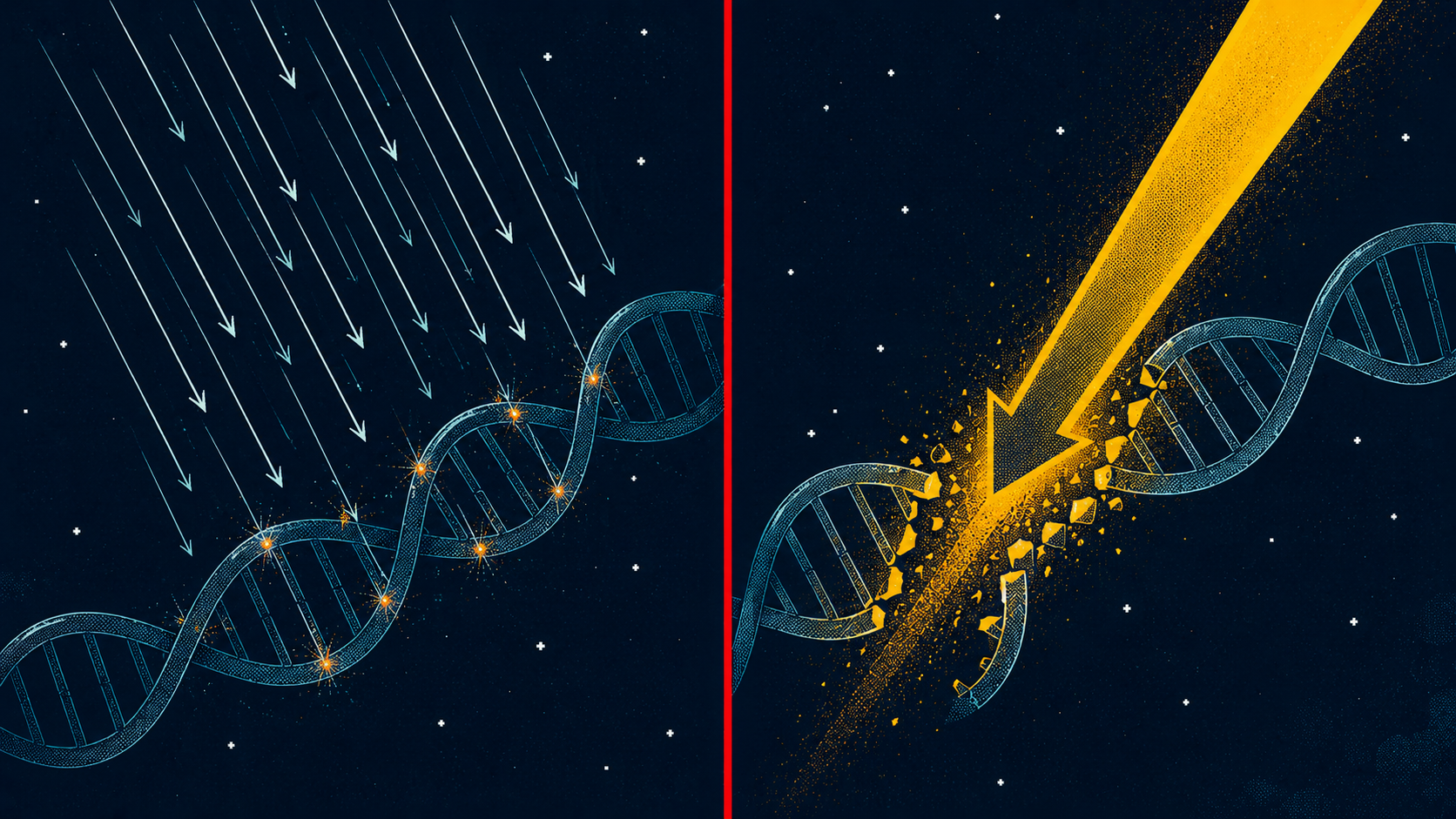
In low Earth orbit, the radiation field includes high-energy protons, heavy ions, and galactic cosmic rays — high-LET radiation. High-LET particles deposit energy in dense tracks. They produce clustered DNA lesions: multiple breaks and base damages concentrated in a small region of the genome. These lesions are harder for standard cellular repair mechanisms to resolve correctly. The probability of a repair error — and therefore a heritable mutation — is higher.
This is the basis of the space breeding hypothesis: not that radiation causes more damage in absolute terms, but that it causes a different kind of damage, resulting in a different distribution of heritable changes.
Microgravity
Microgravity is not directly mutagenic. It does not break DNA. Its significance is different.
Plants use gravity as a directional signal. Roots grow down, shoots grow up, cellular architecture is organized around that constant cue. Remove it for nine months and the cellular signaling systems that depend on gravity — mechanotransduction pathways, cytoskeletal organization, hormone gradients — are altered.
The consequence is not structural damage. It is regulatory change. Gene expression shifts. Stress responses activate. Epigenetic states can be remodeled. Some of these changes may be transient. Some may persist. Whether any persist into progeny under clonal propagation is one of the specific questions this program is designed to answer (Hypothesis H3).
Why the combination matters
Neither radiation nor microgravity alone constitutes the orbital environment. Seeds in low Earth orbit experience both simultaneously, across a continuous nine-month window. Whether the combined stress produces biological outcomes not explained by either variable independently is Hypothesis H5 — the attribution hypothesis — and it is the single most commercially significant question in the program.
Until H5 is validated, Martian Grow will not claim that orbital exposure causes specific traits in cannabis. That claim requires evidence. The program is designed to generate it.
What we are testing with cannabis
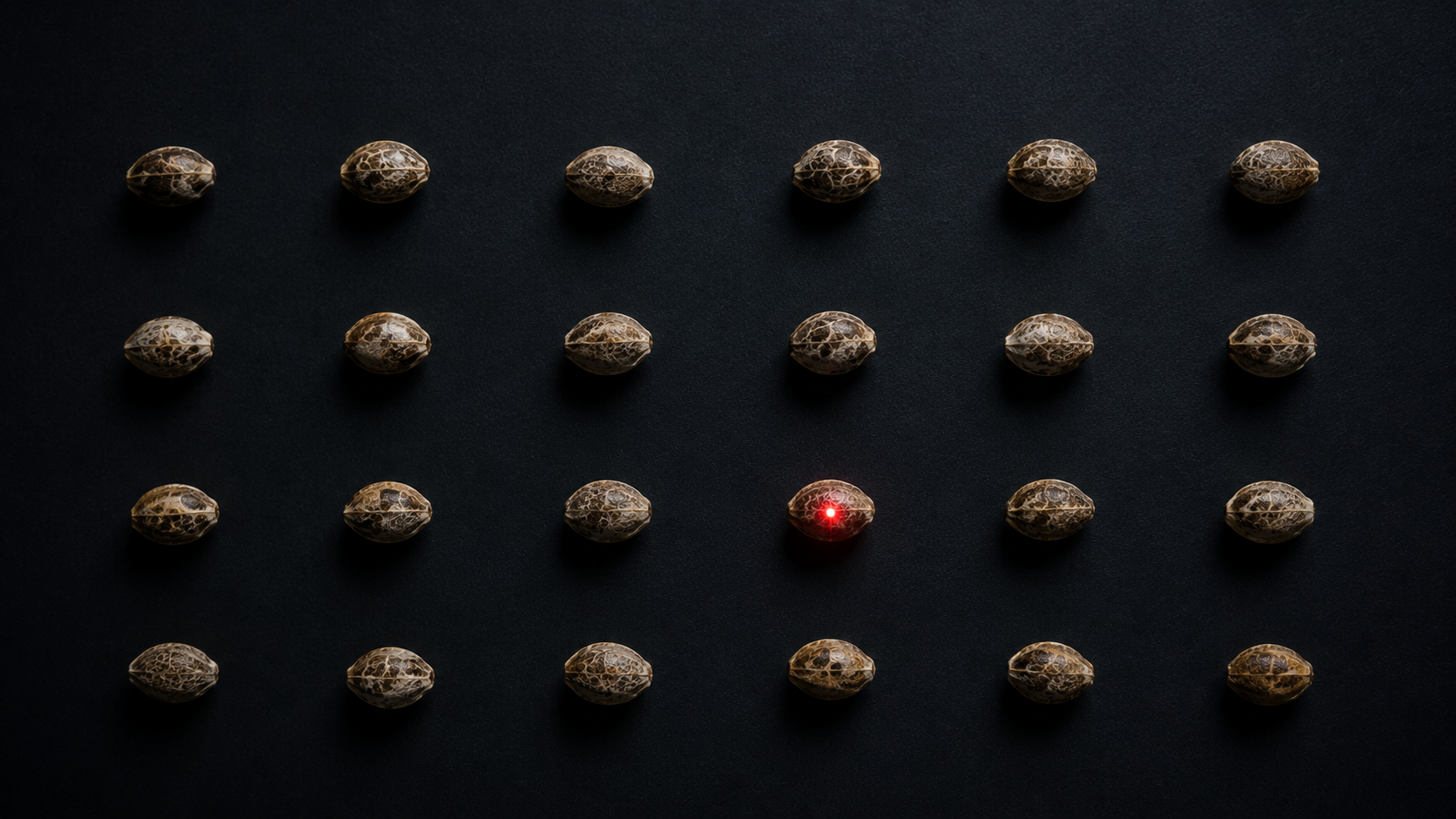
MG-J26 Horizon will carry three cultivars to orbit: Chemdog, Durban Poison, and Hindu Kush. These were selected by community vote from 847 nominations in Round A of the Martian Grow naming community. Each seed lot will be matched against ground controls grown under identical conditions without orbital exposure.
Post-recovery, the program runs five analytical layers:
Genomics. Whole-genome sequencing compares flight seeds to ground controls and to pre-flight baseline characterization. The question: did the distribution of genetic variation shift?
Transcriptomics. RNA sequencing maps gene expression differences. Orbital exposure may change which genes are active even without changing the underlying DNA sequence.
Epigenomics. DNA methylation profiling looks for heritable regulatory changes. Epigenetic variation can be commercially significant and may be more stable under clonal propagation than sequence-level changes.
Metabolomics. Targeted LC-MS/MS profiles cannabinoid and terpene composition. Untargeted metabolomics looks for novel metabolite signatures beyond the standard panel.
Spectral imaging. Hyperspectral analysis of seeds and seedlings. If spectral features predict downstream chemotype or phenotype outcomes (Hypothesis H7), they become an early-triage tool that reduces the cost of selection in future missions.
Every candidate that shows measurable divergence from matched controls must then pass reproducibility gates: the divergence must be stable under clonal propagation across multiple generations before it qualifies as a licensable cultivar. Interesting observations are not commercial assets. Stable, reproducible, documented cultivars are.
Why it matters for cannabis
Cannabis wholesale prices have compressed from roughly USD 8-12 per gram in 2015 to approximately USD 1.40-1.60 per gram in 2024. The cause is supply growth in licensed markets. The consequence is that producers can no longer compete on scale or efficiency alone. The only remaining lever for margin is genetics.
Specifically: cultivars that are chemotypically distinct, documentably stable, and traceable enough to defend in regulatory and commercial contexts. These are scarce. Conventional breeding produces them, but slowly — typically four to six years from cross to stable commercial line. And the resulting cultivars converge: the same gene pools, the same parent lines, the same terpene profiles, because everyone is selecting from the same standing variation.
Space breeding, if the hypotheses hold, accesses a different pool of variation. High-LET radiation can induce lesions and resulting mutations at loci that terrestrial mutation breeding rarely touches. Microgravity may shift regulatory states that selective breeding cannot easily replicate. The resulting population, if it shows heritable divergence, contains candidates that did not exist before the mission.
Whether that divergence is commercially valuable is an empirical question. The answer will come from the grow-out, the assays, and the reproducibility cycles. Not from the launch.
What cannot yet be claimed
Cannabis-specific outcomes from orbital exposure are unknown. The published science on space breeding is real, and it validates the mechanism in other crop species. It does not prove that cannabis will respond in the same way, at the same frequencies, or with commercially useful traits.
MG-J26 will generate the first dataset from which cannabis-specific baselines can be established. Until that data exists, all statements about what orbital exposure will do to cannabis genetics are hypotheses under investigation.
That is not a weakness. It is the point. The program is designed to find out.
Further reading
Space plant biology literature — NASA Technical Reports Server, search: spaceflight plant gene expression
Chinese space breeding program overview — Chinese Academy of Agricultural Sciences (CAAS) publications
Ionizing radiation and plant mutagenesis — peer-reviewed review literature on high-LET radiation and crop breeding, available via PubMed